
From the earliest days of Guiding, the movement sought to cater for as many girls as possible, to really fulfil the claim that ‘Guiding is open to any girl who is able to make the Promise’. The first Guides, after all, were ‘lones’ – Girl Scout Patrols and independent Girl Scouts who had established themselves on their own initiative, then sought an adult to take charge of them when they had to transfer to being Guides, and the rulebook insisted they must have an adult female as their Guider in order to register. In urban areas, the gathering of local Patrols into units was a natural result, but in other areas, where girls were more isolated, this was not feasible.
The first problem lay with girls who lived in rural areas. In the early 20th Century, many more people lived in the countryside, in small villages or hamlets, or in isolated farms and rural cottages with few links to the outside world, than do now. In an era when public transport was limited, and cars a newly-invented impossible luxury for all but the few, there were many thousands of individual girls who did not live within feasible reach of a unit (especially given most units met in the evening) – and some villages would always struggle to muster enough girls of the right age (or near enough it to get away with) to ever reach the two Patrol minimum needed to start a unit. In many cases, their only transport to the nearest larger village or town, if any existed, was the bus or train aimed at shoppers, schoolchildren and commuters, the timing of which ruled out any participation in weekday evening activities for those outwith walking or cycling range.
Another group were some of the many girls who attended boarding schools. Where a boarding school had a Headmistress sympathetic to the movement and Mistresses willing to take on the role of Guide Officers in their limited free time, School Guide Units could flourish, and many did – but in schools where there wasn’t a school Guide Company, both busy school timetables and rules barring pupils leaving the grounds usually made it impossible for a girl to join any nearby local Guide Company, at least during term time, if any such existed.
A further group who were catered for by Lone Guiding were Extension Guides, as they were then known. In the early 20th century, any education for the disabled was often patchy or more often non-existent. Some were stuck in long-stay children’s hospitals or institutions for months or years with no educational provision. The lucky few were sent to special boarding schools catering for specific disabilities, often boarding for much of the year from a very young age – these schools tended to offer limited academic options as they focussed mainly on skills for living, and for specific professions. Otherwise, children who were physically unable to attend the local school were usually stuck at home, often with limited contact with other children and no educational provision nor training in practical skills, in some cases rarely leaving the room in which they lived. Letters of activities to try from the Lone Guider could both give them a connection with the outside world they were isolated from, and also a valuable chance to do some of the activities other girls their age were doing too – a rare chance to be the same.

So Lone Guides were established to serve all of these various needs. They had a special Promise Badge, in the same style as the Guide one, but with a large ‘L’ in blue enamel, like the one shown on the left. They received special ‘Company Letters’ from their Guiders with activity ideas which they could carry out for themselves, and also suggestions of ways to plan and carry out the activities they needed to do in order to complete their second and first class awards – and each also included a note from their Patrol Leader with Patrol news and activities to tackle too. Many of the letters would contain pictures and illustrations, and although most of the pages were typed, if the unit contained blind Guides then there might also be some pages typed in braille for the blind Guides to read for themselves. Each Guide carried out the activities in the letter, added her results to the envelope which was attached, and was on her honour to attach the enclosed address label and send it on to the next member of the Patrol without delay – once the last Guide had finished, she sent it back to the Guider who could then update their progress records and prepare to circulate the next letter. Where possible the Lone Guides were each also linked to a local unit, particularly in the case of housebound disabled Guides, and the Guiders from that local unit could visit to hold enrolments, assess badge clauses and present badges, and in some cases invite them to join the unit for camps, rallies or special outings. Where this was not possible, a parent or other adult could verify badgework. Where there was a small group of girls in a hamlet or village, they could form a Lone Patrol, linked to a local unit in a nearby locality, but usually working independently of the unit, and only joining up with them for special events where transport could be arranged. Lone Guides at boarding schools could sometimes join in with a local unit during school holidays. Each Lone unit also tried to gather together occasionally – certainly, as many members as possible would try to attend their annual camp, but they also tried to gather at rallies and other multi-unit events in the locality where transport could be managed.
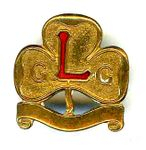
But it wasn’t just Lone Guides – yes, they did also have Lone Rangers. Their Promise badge was similar to the badge for Lone Guides, but their badge had a large red ‘L’ in enamel, regardless of whether they were Lone Land or Sea Rangers. The Ranger programme, especially in the early years of the section, was ideally suited to Lone work, based as it was on the girl extending her Guide skills into the community where she lived and choosing a particular area of community service in which to specialise. Lone Rangers had scope for developing skills and hobbies, and had real advantages when it came to finding or developing community projects to work on. As with Lone Guides, details of their activities were submitted to the Lone Guider for assessment, and special ‘Lones’ camps were held, both for individual Lone units, and also for all the Lones in a much larger area to gather, and swap experiences and ideas.
And by 1921, Lone Guiding had been split into two sections, one catering for the girls who could not attend regular unit meetings due to reasons of geography or health (referred to as ‘Section A’) and also a section catering for older Guides and adults who could not attend meetings due to working hours or other commitments, known as ‘Section B’, which was a forerunner of Trefoil Guild.
Lone Guiding also carried on during World War 2, a time when it became even more vital. Although those in rural areas fared better – the influx of evacuees meant that many villages which had only ever had a Village Patrol or group of Lones now had enough girls of age to open up a unit, and the arrival of Land Girls and ‘Lumberjills’ helped swell rural village Ranger units with keen transfers. On the other hand, some urban Guide units which had never lacked for numbers were overnight decimated by the number of girls who had been evacuated to ‘somewhere in the country’, and those left behind in the city had the problem of trying to keep in touch with their members ‘in exile’, as well as fitting Guiding in around their employment and war work duties. At the same time postal costs rose – in Edinburgh, at one time it became cheaper to send the Lone letters across the city by tram, rather than by post!

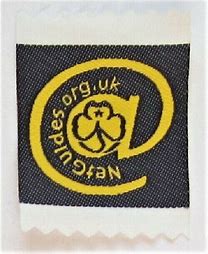
Technology has brought advances for Lone Guiding, with email and the internet making it much easier for the Guiders to keep in touch with members in remote locations than in the days of handwritten or typed letters sent from person to person, allowing scope for more regular communication, for challenges to be sent and replies received more quickly, including for a time the creation of an internet Guide unit, NetGuides. And although there are no longer the housebound disabled girls, and far fewer girls living in rural areas, there are a new band of Lones – those who cannot attend units because of their other out-of-school commitments clashing with Guide night. With so many clubs and classes on offer to girls nowadays, plus the pressure of schoolwork, sometimes it’s hard for girls who want to be Guides to find a unit meeting within range on a night which doesn’t clash – so even in urban areas where regular units are available, girls are finding that ‘Lones’ offers them accessible Guiding, which can be fitted into their schedule – hence Lone Guiding is expanding, with more units needed to meet demand than for a long time – currently most Lone units are at Country/Region level. Unfortunately, some areas of the country aren’t catered for.

Then in 2020 – the coming of the Covid-19 virus meant that all regular unit meetings were cancelled across the UK by Government order. Overnight, all units moved to effectively being Lone units, with those Leaders whose schedules allowed it holding ‘meetings’ by sending out weekly activity newsletters by email or Facebook, or by holding videoconference meetings using platforms such as Zoom. It was Autumn 2021 before units started to resume meeting, and it was into 2022 before all restrictions were lifted and units could get back to normal. But the experience of many Leaders and girls of having to do remote Guiding gave a new understanding of what Lone Guiding had to offer. And even with the return to ‘ordinary’ Guiding in most areas, experiences gained during lockdown, which showed the extent to which Guiding could be done remotely, have led to the opening up of new Lone Guiding units covering larger areas of the UK.
 Leslie's Guiding History